Monday: Trust Triggers 2 and the KG4DI network
On Monday, I started with Trust Triggers 2, a joint event with the KG4DI network. This edition focused on neurosymbolic AI. Marta Sabou gave the keynote, followed by talks and discussions on how symbolic knowledge and machine learning can work together.
I organized this event through the Trustflows community. It was a good way to start the week because trust, interoperability, rules, and neurosymbolic AI returned throughout the SEMANTiCS program.
Tuesday: workshop day and the opening reception
Tuesday was the workshop day. The first thing on my schedule was the keynote by Ricardo Usbeck: More Than Data: Making Knowledge Graphs Work Together for Actionable Insights.
After the keynote, I followed these 3 keynotes:
- Semantics for Transport and Logistics. I once co-organized this workshop, so I was happy to see it being organized again. The program contained very relevant papers on transport data spaces, mappings, railway infrastructure knowledge graphs, permissions, and public transport data standards.
- The SEMANTiCS Developers Workshop. This workshop brought academic and industry developers together to show software and discuss open problems. The program included SPARQL-RL, RDFLib, rudof, and Oxigraph.
- NXDG 2026, the NeXt-generation Data Governance workshop. This was closely related to my work in Trustflows on policies, provenance, usage control, and legally compliant data exchange.
In the evening, there was the opening reception. As local chair, I had the honor of showing everyone around the most beautiful city in the world. Ghent's deputy mayor for Digitalisation, Hafsa El-Bazioui, welcomed everyone to Ghent. She explained why Ghent made so much sense as the host city for SEMANTiCS. Did I mention that Ghent has a SPARQL endpoint?
Wednesday: opening the main conference
Opening the conference was a big honor for the local chair and probably our 30 minutes of fame. Together with the Knowledge on Web-Scale team, I was thrilled to welcome the SEMANTiCS audience to Ghent. I invited a former PhD student who is now a professional musician to do a musical intermezzo.
I also invited Tom Broos from Digitaal Vlaanderen to explain why Flanders, just like Ghent, is a front-runner in Linked Data. He explained how the OSLO initiative and Trustflows were setting the scene for semantics in Flanders.
Juan Sequeda gave the keynote and I was sure he would not disappoint. Juan always came with the hottest takes, and his keynote was probably discussed during the rest of the day.
I then attended these sessions:
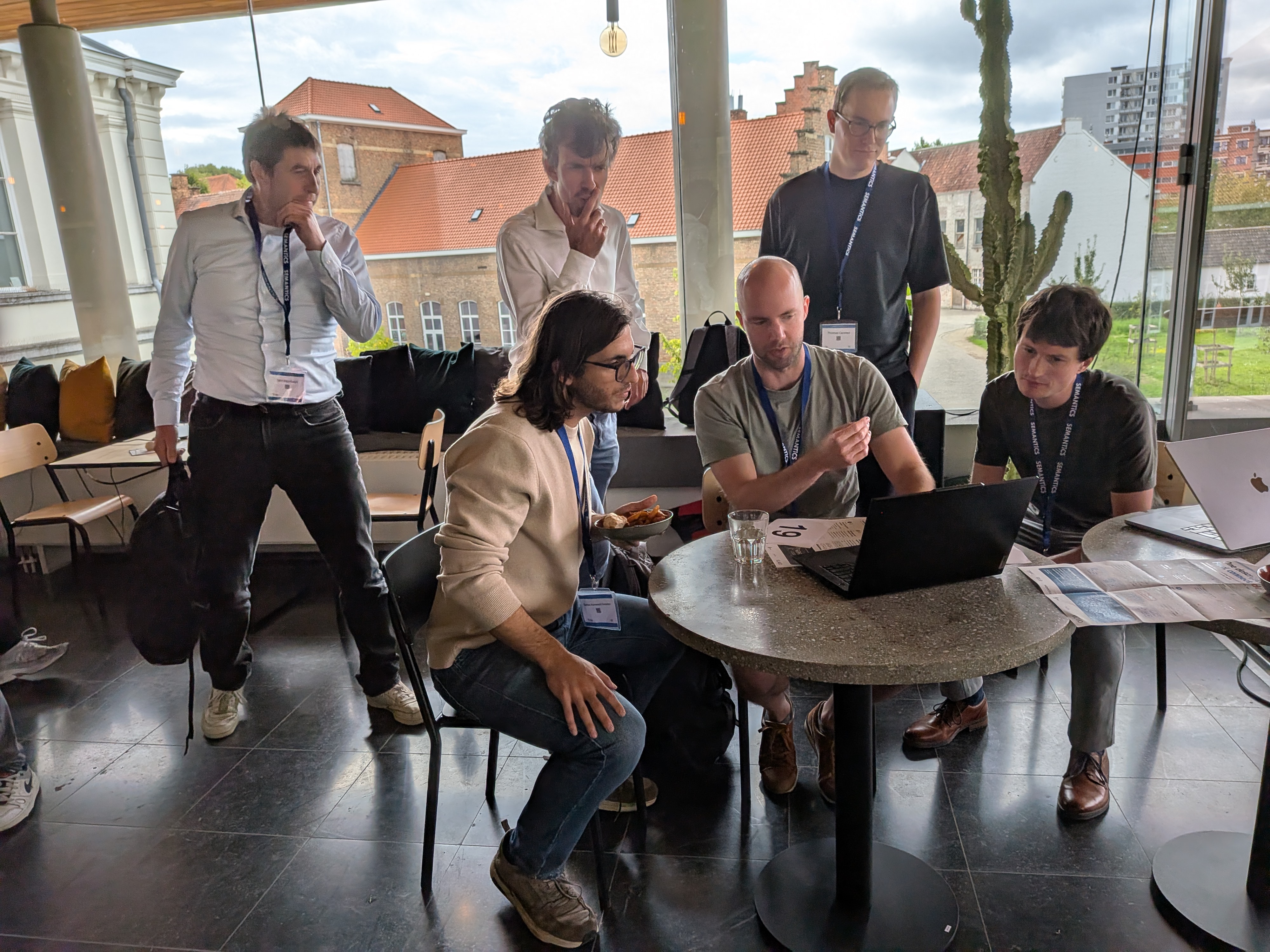
- The posters and demos session. This was always one of the highlights of the conference for me because the best interactions often happened there. I especially wanted to see LDES in action in the building sector.
- The invited talk on neurosymbolic AI. I introduced the speaker. I believed that much of the field was now about neurosymbolic AI. Marta Sabou also discussed the topic at the event on Monday, and it was intresting to see this from multiple angles.
- The fishbowl discussion on neuro-symbolic AI and agentic systems. I joined the fishbowl discussion last year as well. It was a format that made room for direct discussion between speakers and the audience.
Thursday
Friday: Belgian Data Spaces Day
On Friday, I went to the Belgian Data Spaces Day in Brussels. The program brought together European policy updates, Belgian data space use cases, and a panel on what data spaces needed to succeed. If you were still around after SEMANTiCS, you were welcome to join the event.
P.S.
Our team is open to collaborating. We’re currently looking for new projects. Contact us!
My contributions at SEMANTiCS2026
I co-authored a couple of papers at SEMANTiCS2026.